Incomplete collision repairs can affect vehicle performance when structural, mechanical, or electronic conditions related to the collision remain unresolved. At Royal Collision, we provide collision repair in Riverside, CA, considering documented damage, applicable manufacturer requirements, and affected vehicle systems rather than exterior appearance alone.
Key Takeaways:
- Look beyond appearance: Finished body panels do not show how every affected system functions.
- Connect damage to function: Structural, mechanical, and electronic conditions can influence vehicle operation.
- Use vehicle-specific information: Quality collision repair considers applicable manufacturer procedures for the damaged vehicle.
How Can Incomplete Collision Repairs Affect Vehicle Performance?
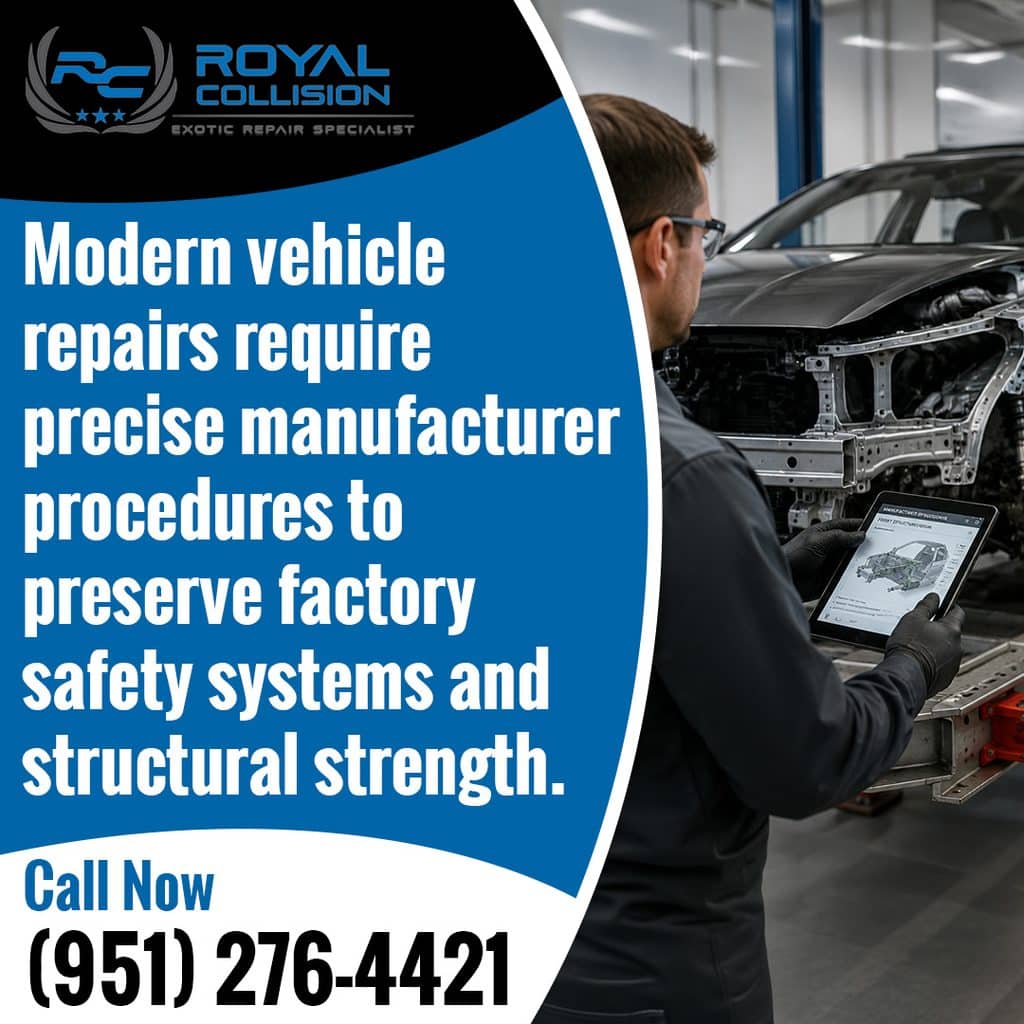
Incomplete collision repairs can affect performance when unresolved collision-related conditions change vehicle geometry, mechanical operation, or electronic function. This matters on later-model vehicles because body structure, mechanical components, sensors, and electronic systems can depend on one another.
Structural dimensions can influence component position and alignment. Collision-related steering or suspension damage can affect vehicle response. Electronic faults may also affect vehicle functions after exterior panels have been restored.
California’s Bureau of Automotive Repair (BAR) states that most collision repairs are concealed behind a vehicle’s body panels, making it difficult for owners to confirm whether work was done properly.
At Royal Collision, we evaluate documented collision damage and consult applicable manufacturer repair information. We focus on how the repair relates to the vehicle rather than judging the work by appearance alone.
Which Collision-Related Areas Can Influence Vehicle Function?
Several collision-related areas can influence vehicle performance. Vehicle design, damage location, and manufacturer requirements help determine which repair operations apply to each vehicle.
| Collision-related area | Connection to vehicle performance |
| Structural geometry | Vehicle dimensions can affect component position and alignment |
| Steering and suspension | Collision damage can affect steering response and handling |
| Electronic systems | Diagnostic faults can identify concerns involving affected components |
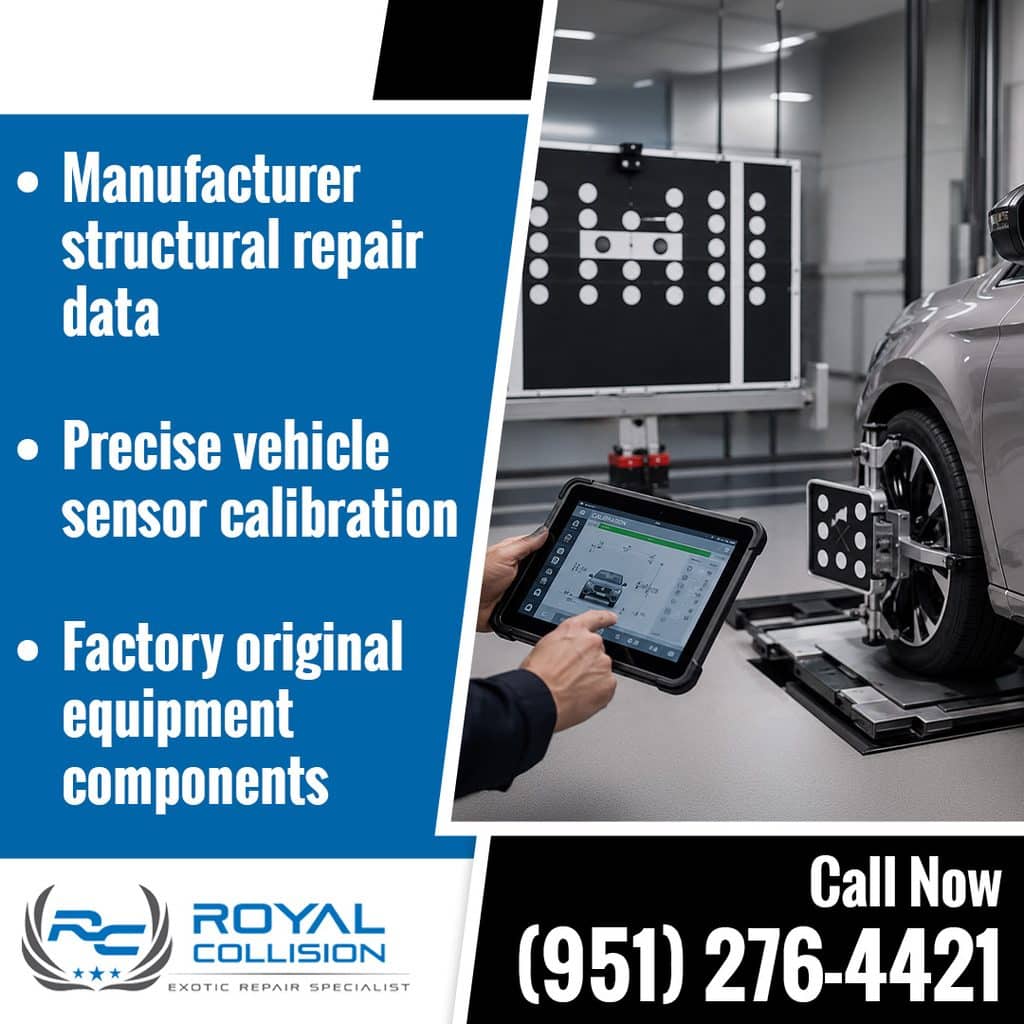
| ADAS-related components | Certain repairs can create manufacturer-defined calibration requirements |
For applicable structural work, we use a Cheetah® frame rack and Car-o-liner Car-o-matic measuring system. We also perform collision-related mechanical work.
We use Autel equipment for in-house pre-repair and post-repair diagnostic scanning. When ADAS calibration is required, we coordinate the work with an outside qualified specialist.
For OEM collision repair, we use applicable manufacturer information to determine which requirements relate to the documented damage. Every vehicle may not require the same repair operations.
Why Do Manufacturer Repair Requirements Matter to Vehicle Performance?
Manufacturer repair information identifies procedures that apply to a specific vehicle and repair area. These requirements help connect collision damage with repair operations that may influence vehicle function.
California BAR explains that some collision damage may not be readily visible during an initial inspection. Authorized disassembly can help identify the extent of damage before additional repairs are performed.
With OEM auto body repair, vehicle-specific information matters because exterior appearance cannot establish structural measurements or electronic system status.
At Royal Collision, we research applicable OEM procedures and document repair needs. We communicate with the customer’s insurer about the repair plan and advocate for OEM procedures and OEM parts supported by that plan.
What Should Drivers Ask About Vehicle Performance After Repairs?
Drivers can ask focused questions to learn how a repair addressed vehicle function without trying to diagnose collision damage themselves. The answers should relate directly to the vehicle and completed repair.
Ask the repair shop:
- Did the collision affect structural or mechanical components?
- Were diagnostic scans required for my vehicle?
- Did any repair operation require ADAS calibration?
- Which manufacturer procedures apply to the damaged areas?
Drivers researching collision repair in Riverside, CA may want to know how a shop determines what their vehicle needs. At Royal Collision, we base our repair planning on documented damage and applicable manufacturer information.
Frequently Asked Questions
Can a vehicle look repaired while a collision-related problem remains?
Yes. Exterior panels can conceal structural, mechanical, and electronic components affected by a collision. A finished exterior alone cannot establish the condition or function of those areas.
Does every collision require structural repair or ADAS calibration?
No. Required repair operations depend on the vehicle, collision damage, affected components, work performed, and applicable manufacturer procedures. Structural repair or ADAS calibration is not required after every collision.
Why can later-model vehicles require more than visible body repairs?
Later-model vehicles can combine structural components, mechanical systems, electronics, sensors, and driver-assistance technology. Collision damage may therefore involve vehicle functions beyond damaged exterior panels. Required repairs depend on the vehicle and affected components.
How Can You Protect Vehicle Performance After Collision Repairs?
A complete repair should address the collision damage that affects how your vehicle functions, not only how it looks. At Royal Collision, we use documented damage and applicable manufacturer information to guide our repair planning. If you need professional collision repair for a later-model vehicle, contact us at (951) 276-4421 or ryan@royalcollisionriverside.com to discuss your vehicle and repair needs.