An incomplete collision repair can leave documented damage, required repair operations, diagnostic concerns, or calibration requirements unresolved. At Royal Collision, we approach professional collision repair by identifying what the damaged vehicle requires and using applicable manufacturer information to guide the repair plan.
Key Takeaways:
- Define the repair scope: Visible damage may not reveal everything that requires attention.
- Use vehicle-specific information: Quality collision repair considers documented damage and applicable manufacturer procedures.
- Document repair needs: Structural measurements, scans, parts, or calibration may apply based on the vehicle and collision damage.
What Can an Incomplete Collision Repair Leave Unresolved?
An incomplete collision repair can leave part of the required repair scope unaddressed. Depending on the damage, unresolved items may include structural conditions, parts requirements, diagnostic findings, manufacturer-required operations, or calibration requirements.
California’s Bureau of Automotive Repair (BAR) notes that most collision repairs are concealed behind a vehicle’s body panels, so damage and repair issues may not be obvious from a simple visual inspection. Authorized disassembly can help identify the extent of damage before additional repairs are performed.
At Royal Collision, we evaluate documented collision damage and research applicable manufacturer information while developing the repair plan. This helps us identify repair needs tied to the vehicle and damaged areas rather than relying on exterior appearance.
Which Areas Can Be Part of an Unresolved Repair Scope?
The repair scope depends on the vehicle, collision damage, and applicable manufacturer requirements. Similar-looking damage can require different operations because vehicle construction and affected components vary.
| Repair-scope area | What may require attention |
| Structural condition | Measurement and applicable structural requirements |
| Parts and fitment | Required parts and related fitment operations |
| Diagnostics | Collision-related scan findings |
| Manufacturer procedures | Vehicle-specific operations for affected areas |
| Calibration | Requirements tied to affected components or repairs |
For structural repairs, our technicians use a Cheetah® frame rack paired with a Car-O-Liner Car-O-Matic measuring system. We also handle collision-related mechanical repairs and conduct both pre- and post-repair diagnostic scans in-house using Autel equipment.
When ADAS calibration is required, we coordinate that work with an outside qualified specialist.
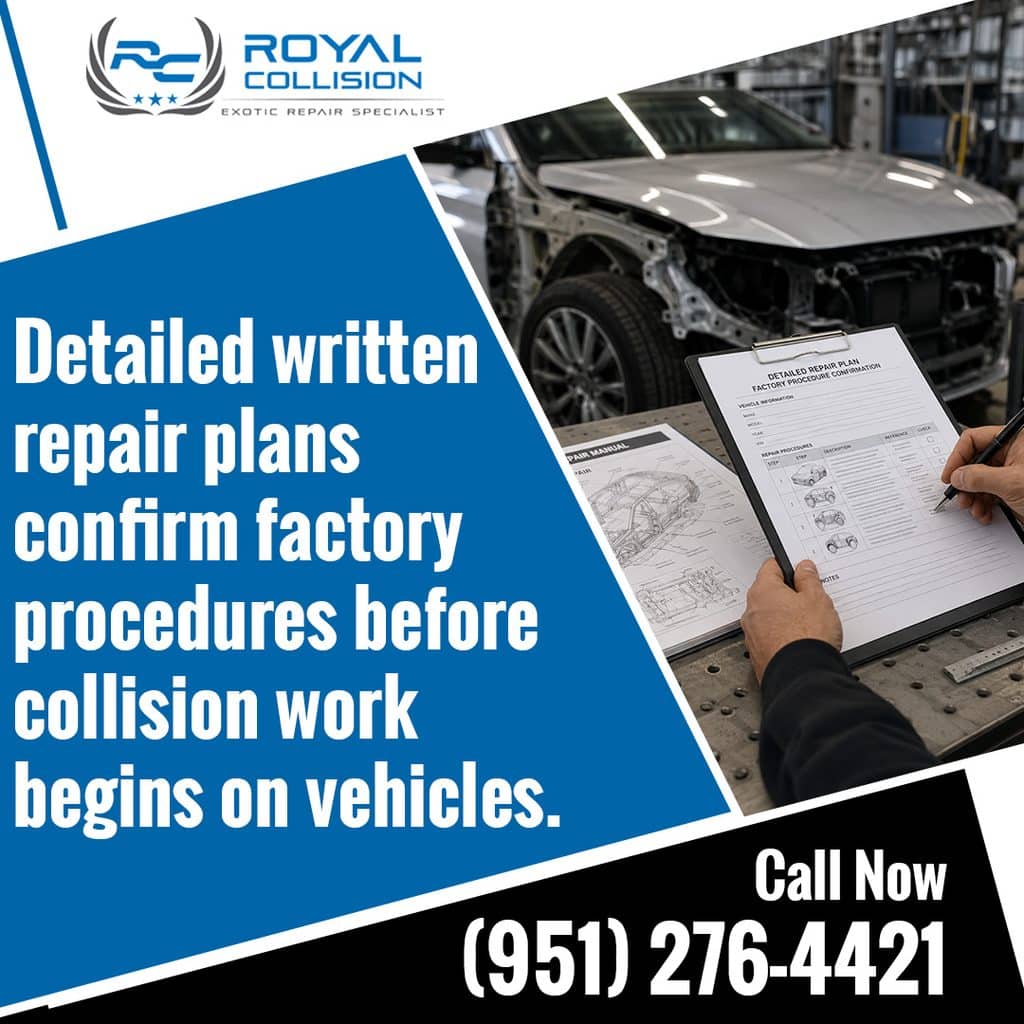
For OEM collision repair, we use applicable manufacturer information to identify requirements related to documented damage.
How Does Documentation Help Define the Repair Scope?
Repair documentation connects identified damage with authorized repair work. For an insurance repair, supporting information can also explain why documented repair needs differ from an earlier estimate.
California BAR’s Write It Right guidance addresses estimates, customer authorization, repairs performed, and parts supplied. Additional repairs require customer authorization before the work is performed.
At Royal Collision, we use applicable manufacturer procedures, photographs, diagnostic information, and other documentation to support identified repair needs. We communicate with our customer and the insurer about work supported by the repair plan.
In OEM auto body repair, manufacturer procedures and parts requirements can help define what belongs in the repair scope. We advocate for OEM parts and applicable OEM procedures with insurers based on the documented repair plan.
What Should Customers Ask About Their Repair Scope?
Customers can ask direct questions about what the shop identified and included in the repair plan. The answers should relate to their vehicle and documented collision damage.
Ask:
- Was further evaluation needed after damaged areas were disassembled?
- Which manufacturer procedures apply to my vehicle?
- Were structural measurements or diagnostic scans required?
- Does the documentation identify the authorized repair work?
Drivers who need collision repair in Riverside, CA can use these questions to discuss repair scope rather than relying on visible damage alone.
Frequently Asked Questions
Can an incomplete repair involve more than damaged body panels?
Yes. Depending on the vehicle and collision damage, the repair scope may include structural, mechanical, diagnostic, parts, or calibration-related work.
Does every collision require structural measurement?
No. Structural measurement depends on the vehicle, damaged areas, repair needs, and applicable manufacturer information.
Does an insurance estimate always define the complete repair scope?
No. Further evaluation, disassembly, diagnostic findings, or applicable manufacturer information may identify repair needs that were not reflected in an earlier insurance estimate.
How Can You Get Clear Answers About Your Collision Repair?
A complete repair plan should reflect the documented needs of the damaged vehicle. At Royal Collision, we work for our customers while communicating documented repair needs to insurers. If you need quality collision repair, contact us at (951) 276-4421 or ryan@royalcollisionriverside.com to discuss your vehicle and repair needs.