
Your signature authorizes the specific work described in the estimate or linked repair documents. Teardown consent and repair consent cover different jobs. For a collision repair insurance claim, insurer payment approval does not replace your authorization. At Royal Collision, we review repair options with you before ordering parts.
Key Takeaways:
- Identify the job: Check whether you are approving disassembly or repairs.
- Review the charges: Ask what work and estimated costs your consent covers.
- Keep copies: Obtain documents requiring your signature when you sign.
What Work Does a Repair Authorization Permit?
A repair authorization records your consent for a described job and associated estimated costs. Read the work description before signing. Ask the shop to identify the estimate referenced by the authorization, including the version or date when available.
How Do Teardown Consent and Repair Consent Differ?
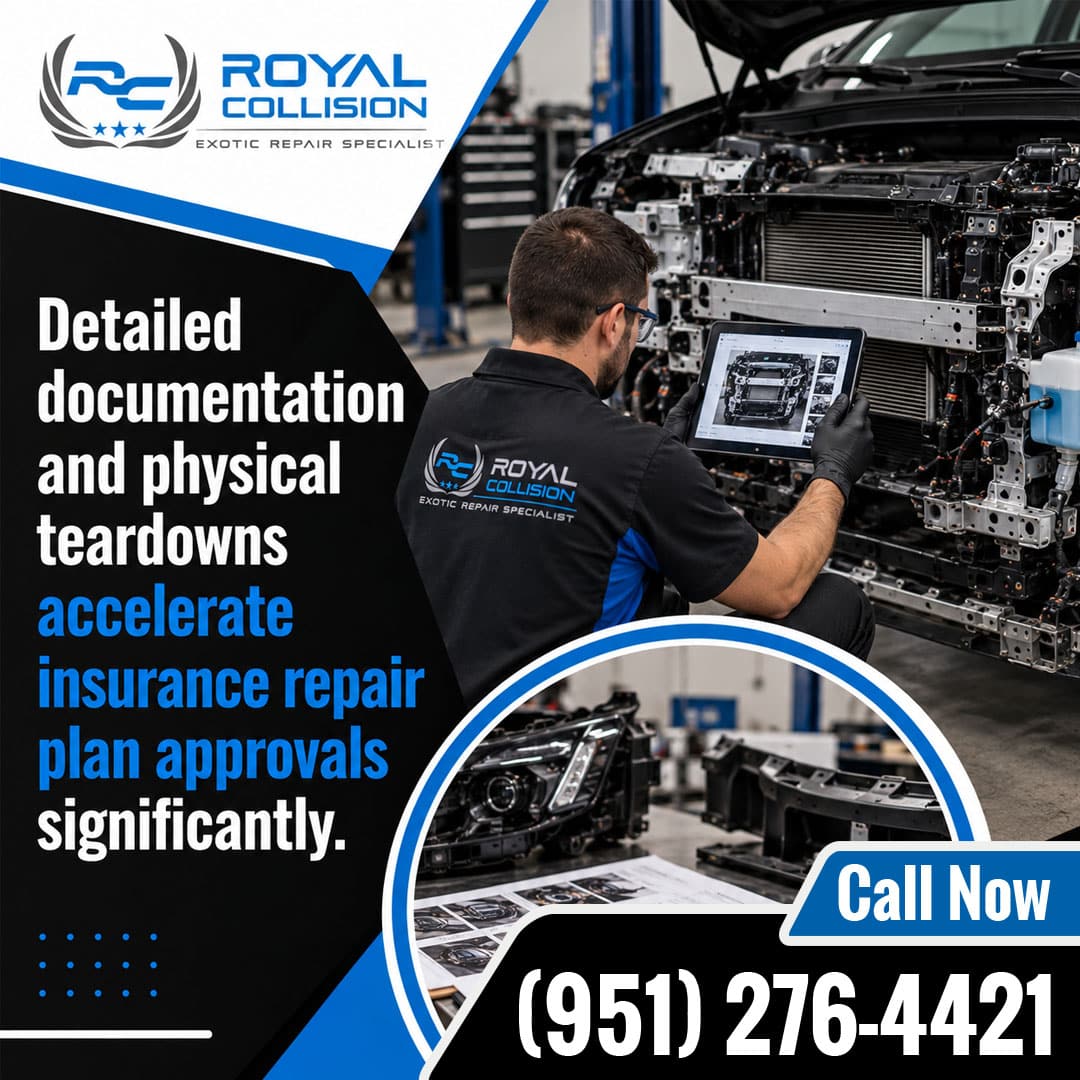
Teardown means disassembling specified vehicle areas to diagnose needed repairs. Authorizing teardown does not automatically authorize the subsequent repair job.
The California Bureau of Automotive Repair’s Write It Right guide, updated January 2026, explains that shops must provide a teardown estimate and obtain customer authorization before disassembling a vehicle or component for diagnosis. After teardown, the shop must provide an itemized estimate for the necessary parts and labor and obtain authorization before repairing or reassembling the vehicle.
| Authorization | Work covered | What to check |
| Teardown consent | Disassembly for diagnosis | Vehicle area and teardown cost |
| Repair consent | The described repair job | Work description, parts, and estimated costs |
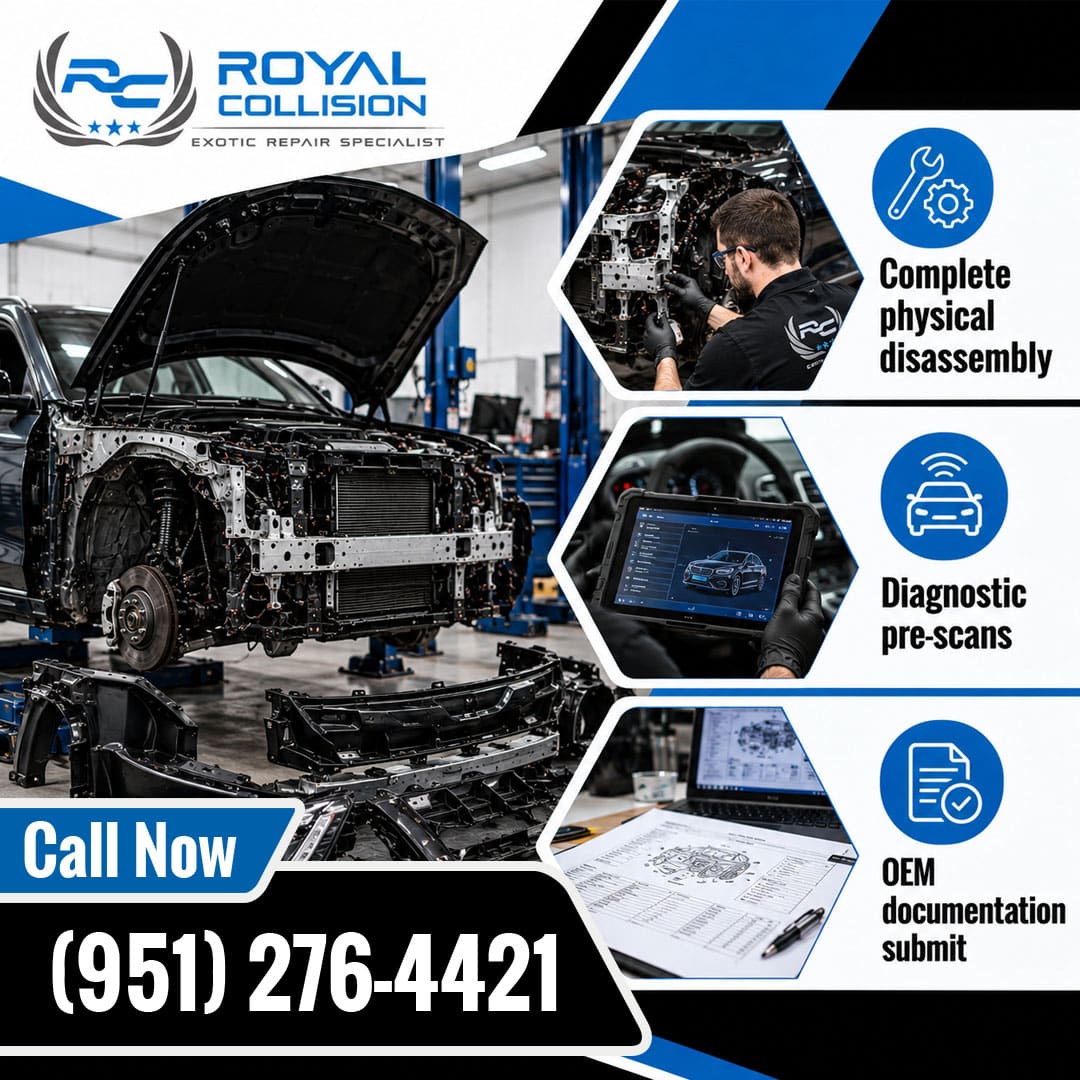
On a later-model vehicle, diagnostic scanning and outsourced calibration may be separate repair-plan entries. Ask whether those operations are included in the work you are approving. We perform diagnostic scanning in-house and arrange calibration through an outside provider when required.
Does Insurance Approval Replace Your Permission?
In a collision repair insurance claim, insurer approval concerns payment; customer authorization concerns permission for the shop’s work. At your body shop, the insurance claim process involves both decisions. An insurer’s estimate or payment decision does not give the shop permission to carry out every listed operation without your consent.
The California Bureau of Automotive Repair’s guidance on insurance transactions states: “the vehicle owner is the customer.” Ask the body shop handling your insurance claim to explain payment-related wording separately from permission to repair. Your signature does not, by itself, establish insurance coverage or payment for every authorized operation.
What Should You Check Before Giving Consent?
Before approving work, connect the authorization to a specific estimate and ask about unclear work descriptions or charges. We recommend reviewing the paperwork for your auto insurance claim for repair with us and asking your insurer about payment questions.
- Match the documents: Check the vehicle details and estimate reference.
- Identify the scope: Ask whether consent covers diagnosis, teardown, or repairs.
- Clarify costs: Ask about authorized charges and any stated customer responsibility.
- Request copies: California guidance requires copies of documents needing your signature when signed.
At Royal Collision, we submit the repair plan to you and your insurer, discuss the insurer’s response and your repair options, and order parts after customer approval. We have no Direct Repair Program agreements. Our collision repair insurance assistance focuses on your vehicle’s documented repair needs and your participation in the decisions.
Here is a review by our customer Lisa P.: “After getting into an accident with my Toyota Camry, I needed to find an Autobody shop near me that didn’t work with insurance companies. I came across Royal Collision and set up an appointment. Ryan was very professional and helpful from the star;, he was able to walk me through the process and make sure my Toyota was fixed correctly with OEM parts. If you need a collision shop, Royal Collision is the place to go!!”
Frequently Asked Questions
California authorization guidance also addresses remote consent, unattended drop-offs, and requests for replaced parts.
Can I authorize repairs by text message?
Yes. California permits electronic authorization when the shop records the required consent details on the estimate.
Does an after-hours drop-off note authorize repairs?
No. California guidance says a note requesting repairs does not replace the required authorization process.
Can I ask to receive replaced parts?
Yes. Request replaced parts when authorizing the estimate. Exceptions apply to certain exchange and warranty-return parts.
Who Can Help Explain Your Repair Authorization?
We can help you connect the authorization to the proposed repair plan. Ask us to explain any unfamiliar operation before giving consent. At Royal Collision in Riverside, CA, we guide you through repair planning and explain the options available for your vehicle. Contact us at (951) 276-4421 or ryan@royalcollisionriverside.com for collision repair in Riverside, CA, and we can discuss your questions related to insurance as well.