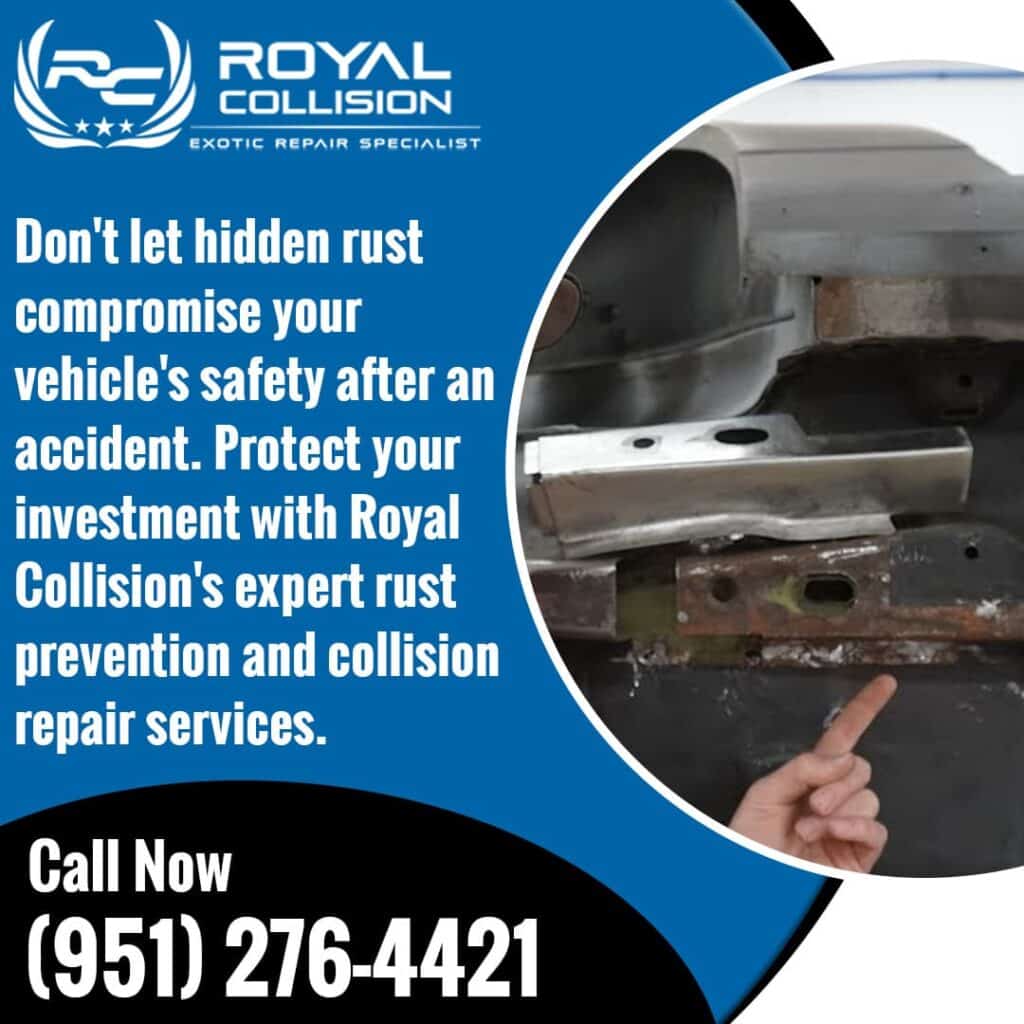
After a collision, your vehicle may sustain hidden damage beyond visible dents or scratches. Rust and corrosion can develop in areas that aren’t immediately noticeable. If corrosion progresses into load-bearing or energy absorbing structures, it can reduce structural strength and, in severe cases, diminish crashworthiness. Superficial rust on nonstructural panels is mainly cosmetic but should still be addressed before it spreads. Early treatment limits repair costs, preserves resale value, and reduces safety risk when structural components are affected.
Royal Collision addresses both visible and hidden damage, restoring your vehicle and applying protective measures to prevent future rust. As a trusted collision repair shop in Riverside, our team performs prompt, professional repairs that help maintain the car’s structural integrity and stop corrosion from spreading to other parts.
Why Rust Forms After a Collision
Even minor collisions can breach paint and factory protective coatings, exposing bare metal to oxygen, moisture, and road contaminants such as salt. Once exposed, oxidation starts, and corrosion can progress beneath the paint if the area is not cleaned and repaired.
Paint and Coating Damage
Scratches or dents allow water to reach the metal underneath. Rust can start small but grow beneath the surface. Without proper repair, moisture can seep into layers under the paint, worsening metal decay. Certified collision repair shops restore paint and coatings and apply corrosion-blocking treatments.
Structural Risks
Corrosion affects more than the exterior, as it can reach the frame, engine bay, and underbody. Preventing rust on the vehicle’s frame helps keep the car strong and safe in future accidents. Repairing corrosion-prone areas quickly helps prevent small damage from becoming a major safety issue.
Water Exposure After a Collision
Rain, car washes, or road moisture can worsen rust on exposed metal. Areas like fender scratches or chipped edges are entry points for corrosion. Protective treatments help shield these areas and slow down further deterioration. Acting quickly can save hundreds or thousands in future repairs.
Taking prompt action and addressing affected components early helps protect your vehicle’s structure, maintain its appearance, and prevent corrosion from spreading.
Signs of Rust After a Collision
After a collision, rust and corrosion can begin forming even before visible damage fully appears. Paying attention to early warning signs can help prevent costly repairs and maintain your vehicle’s safety.
- Bubbling or peeling paint on affected areas: After a collision, the paint may start to lift or bubble at the damaged spots. This is often an early indicator that moisture is reaching the metal beneath the surface.
- Orange or brown discoloration around scratches or dents: Rust often begins as orange or brown patches near areas where the paint or protective coating was chipped. These discolorations signal that the metal is oxidizing and may require professional treatment.
- Rough, flaky, or textured metal surfaces: Metal exposed after an accident can develop a rough or flaky texture as rust begins forming. Running your fingers over these areas may reveal hidden corrosion.
- Moisture Accumulation in Frames: Water can seep into crevices, door frames, or trunk edges where collision damage occurred. Persistent moisture in these areas often leads to hidden rust, which can weaken the structure over time.
- Noises from Underbody Indicating Weak Metal: Rust forming on the undercarriage or suspension mounts may produce creaks, rattles, or other unusual noises while driving. These sounds can indicate that metal components are losing strength and need inspection.
- Soft or Weakened Metal at Mounting Points: Areas near bolts, brackets, or other mounting points may feel smooth or less rigid due to corrosion. Early-stage structural rust can compromise the vehicle’s safety if ignored. Professional repairs can reinforce these critical points and prevent further damage.
Early detection of these signs makes professional repairs easier and helps prevent further damage to the frame, body panels, or undercarriage.
How Certified Collision Repair Stops Rust
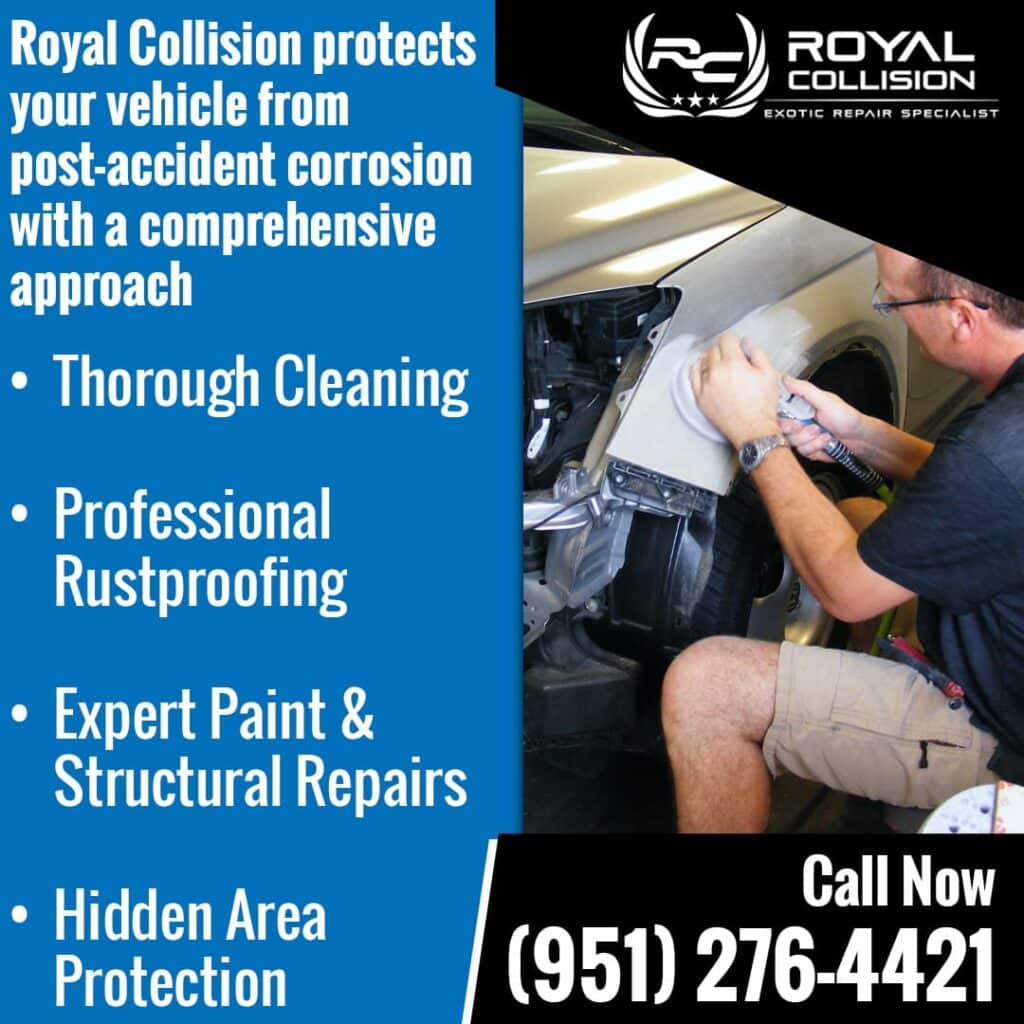
Certified collision repair services restore both the safety and structural integrity of a vehicle while preventing rust and corrosion. Technicians follow manufacturer-approved procedures that go beyond cosmetic fixes, addressing both visible and hidden damage.
Cleaning and Preparation
Dirt, road salt, and moisture often remain in hidden areas. Certified technicians clean exposed metal surfaces, including the underbody, wheel wells, and inner panels. This removes contaminants that accelerate corrosion. Thorough cleaning before repairs is a key part of professional vehicle repair to prevent long-term damage. The collision experts of Riverside provide expert repairs while protecting your vehicle from rust and corrosion.
Rustproofing Coatings
After cleaning, protective coatings are applied to metal parts. These coatings block water and other elements that cause corrosion. Riverside has a dry Mediterranean climate with limited annual rainfall but seasonal wet months. Because water and road contaminants can reach exposed metal during the rainy season or after storms, timely cleaning and protective treatments still reduce corrosion risk. Proper coatings protect structural components, inner panels, and the undercarriage over time.
Paint and Panel Restoration
Paint and panels with scratches or wear are restored to prevent moisture from reaching the metal. Professionals match the paint and restore protective coatings on visible and hidden areas. Treating inner body panels early reduces the need for future body panel corrosion repairs.
Structural Repairs
Collision damage can affect the frame or other structural parts. Structural repair may include replacing corroded metal with OEM parts and applying protective coatings. Proper frame repair keeps the vehicle strong and safe.
Combining cleaning, rustproofing, paint repair, and structural work lowers the risk of long-term corrosion and maintains vehicle safety. Acting promptly on repairs keeps your vehicle strong, corrosion-free, and reliable for years.
Steps Drivers Can Take Immediately After a Collision
Even before visiting an auto body shop, there are simple actions drivers can take to protect their vehicle from corrosion and further damage. Taking prompt action can prevent small scratches or dents from turning into long-term structural or cosmetic issues. These steps also help preserve your car’s resale value and overall safety.
Dry the Vehicle Quickly
Moisture in scratches or dents accelerates corrosion. Use a towel or air blower to remove water from exposed areas as soon as possible. Pay special attention to wheel wells, door edges, and the undercarriage, where water can collect unnoticed. If the weather is wet, consider moving the vehicle to a covered area or garage temporarily. Quick drying reduces the chance that oxidation will start under the paint.
Cover Exposed Metal
Temporary coverings, such as plastic or tape, shield bare metal from rain, humidity, and road debris until professional repairs are completed. Make sure the covering is tight and fully covers affected areas to prevent water or dirt from getting underneath. Even small gaps can allow moisture in, which can start corrosion. Using clear tape will enable you to monitor the damage without constantly removing the cover. Covering the metal also prevents dirt and debris from scratching or further damaging the area.
Avoid Salt Exposure
Roads treated with salt increase the risk of metal decay. Rinse the undercarriage and wheel wells thoroughly after driving on salted roads. Salt can accelerate corrosion, especially if it remains trapped in hidden areas. Avoid driving through puddles or standing water that may carry road chemicals to vulnerable spots. Frequent rinsing and cleaning help maintain the protective coatings and reduce the likelihood of metal deterioration.
Inspect Hidden Areas
Check under wheel wells, behind bumpers, and inside doors for scratches or dents where water could collect. Look for any small cracks or chips in the paint that could let moisture reach the metal. Using a flashlight can help identify damage in dark or hard-to-reach areas. Identifying hidden damage early makes professional repairs easier and less costly.
Schedule Certified Collision Repair Promptly
Early professional repairs restore protective coatings, fix damaged panels, and apply rustproofing to prevent corrosion from spreading. Shops follow manufacturer-recommended procedures to repair structural and cosmetic damage safely. They also inspect hidden areas for early signs of corrosion that may not be visible to the naked eye. Acting quickly reduces the chance of frame or suspension problems worsening over time.
Taking these steps immediately after a fender bender helps maintain your vehicle’s structure, appearance, and long-term reliability. Proactive care today saves time, money, and prevents corrosion problems in the future.
Benefits of Prompt Collision Repair for Rust and Corrosion Prevention
Timely professional repair does more than restore your vehicle’s appearance. It protects metal surfaces from corrosion, maintains safety, and helps preserve long-term value.
Protects Vehicle Safety
Professional auto body repair addresses both visible and hidden damage that could compromise the vehicle’s structure. Rust and corrosion weaken the frame, suspension, and body panels over time. Repairing exposed metal promptly maintains the car’s crashworthiness. Preventing corrosion in key areas helps the vehicle handle future impacts safely. Regular inspections and timely repairs keep safety systems intact and reliable.
Reduces Future Repair Costs
Preventing corrosion early reduces the chance of costly repairs down the line. Untreated corrosion can spread to body panels, underbody components, and hidden structural areas. Minor scratches or dents left unattended often develop into expensive issues over time. Professional rustproofing protects these vulnerable areas before damage worsens, and investing in early treatment helps minimize long-term maintenance expenses.
Maintains Resale Value
A vehicle free from corrosion retains its market appeal and resale value. Buyers are less likely to purchase cars with visible corrosion or hidden metal decay. Proper rust prevention shows that the vehicle has been well cared for. Structural integrity and protective coatings enhance confidence in vehicle quality. A corrosion-free undercarriage and panels make the car easier to sell at a higher price.
Getting professional collision repair in Riverside, CA, protects your vehicle from corrosion while maintaining safety, performance, and long-term value.
Choosing the Right Collision Repair Shop
Selecting a certified auto body shop allows your vehicle to receive repairs that meet manufacturer standards. Skilled technicians not only fix visible damage but also treat hidden areas prone to corrosion. Professional shops apply protective coatings, restore paint, and inspect structural components to prevent future rust.
Using OEM parts is generally recommended because they are designed to match factory fit and performance, which can simplify proper repairs and help preserve warranty coverage and resale value. Some high-quality aftermarket parts may be acceptable if they meet manufacturer specifications. Confirm part choices with the vehicle manufacturer and your insurer when safety-critical components are involved. For drivers looking for reliable collision repair nearby, choosing experienced professionals provides confidence that their vehicle will remain strong, dependable, and corrosion-free for years.
Frequently Asked Questions (FAQs)
1. Why does rust form after a minor collision?
Even small dents or scratches can damage the paint and protective coatings on your vehicle. Once the metal is exposed, moisture, dirt, and road salt can cause corrosion over time, sometimes in hidden areas like underbody panels or inside fenders.
2. Can corrosion affect my vehicle’s safety?
Yes, it can weaken the frame, suspension mounts, and structural panels. If left untreated, it may compromise the vehicle’s crashworthiness and reduce overall safety in future collisions.
3. Why choose a certified collision repair shop for rust prevention?
Certified shops follow manufacturer-approved procedures, clean and treat hidden areas, apply protective coatings, and use OEM parts. Royal Collision provides long-term corrosion protection and restores structural integrity effectively.
Schedule Your Rust Prevention and Collision Repair with Royal Collision
Rust and corrosion can seriously damage a vehicle after a collision, but professional certified auto body services can stop it from spreading. Royal Collision in Riverside, CA, provides complete collision repair and rust prevention, protecting your car’s safety, structure, and appearance. Using OEM parts and manufacturer-approved repair methods provides long-term protection against metal decay. Proper protective treatments help maintain your vehicle’s long-term value and keep it performing at its best. Contact Royal Collision today at (951) 276-4421 or ryan@royalcollisionriverside.com to schedule professional repairs.