When it comes to vehicle safety, even minor collisions can have hidden consequences. Airbags, crumple zones, and advanced safety systems may be compromised, leaving drivers unaware of potential risks. Many car owners assume cosmetic repairs are enough, but restoring a vehicle’s structural integrity is equally critical to maintaining long-term performance and passenger protection.
Certified auto body shops play a vital role in addressing both visible and hidden damage, using advanced tools and OEM procedures to realign components and recalibrate safety systems. For Riverside drivers, understanding how professional collision repairs affect safety and reliability is essential. Choosing a trusted shop like Royal Collision helps vehicles meet manufacturer standards, protecting both passengers and the vehicle’s future performance on the road.
Why Proper Auto Body Repairs Are Critical for Vehicle Safety
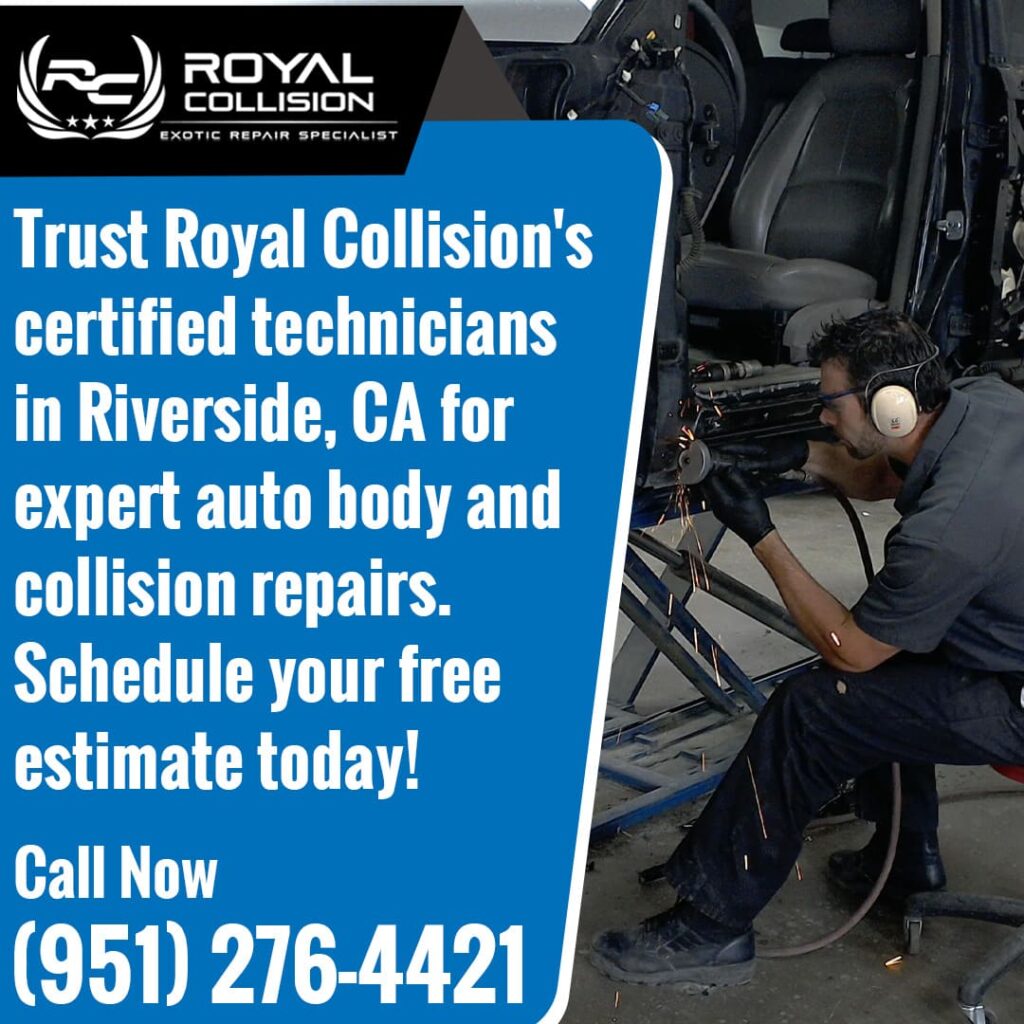
After a collision, every component of a vehicle, both inside and out, needs careful evaluation. Modern cars include advanced safety technologies such as airbags, energy-absorbing crumple zones, high-strength steel, and sensor systems. Repairs done incorrectly can prevent these features from functioning properly in future accidents.
An experienced auto body shop uses specialized tools to return the frame, unibody pillars, and suspension points to the exact dimensions required by the manufacturer, helping the vehicle regain its intended strength and stability. This approach helps protective features, such as airbags and seatbelt pre-tensioners work correctly. Drivers who choose certified auto body repair in Riverside protect themselves, their passengers, and the vehicle’s long-term performance.
How Modern Vehicle Safety Standards Impact Collision Repairs
Vehicle crashworthiness standards guide original vehicle design. After a collision, repairs should follow manufacturer repair procedures and industry best practices when applicable to restore intended performance and safety. Many industry bodies and OEMs recommend or require specific pre- and post-repair scans and calibrations for safety systems.
Structural Damage Requires Precision Repairs
Structural components, including frame rails, unibody pillars, and crumple zones, influence vehicle handling and crash performance. Even minor misalignments can compromise safety, so professional inspections using digital measurement systems are important. When repairs follow OEM procedures and use appropriate parts and methods, they substantially increase the likelihood of restoring the vehicle’s intended strength and crash performance. The degree of restoration depends on the extent of the damage and whether manufacturer repair methods and parts were used.
Technicians inspect welds and structural joints in accordance with manufacturer guidance. Where required by OEM procedures, non-destructive testing and documented inspection methods are used to verify weld quality and to identify stress points not visible in a basic visual inspection. Advanced alignment tools help restore the frame to manufacturer specifications, preventing uneven wear on tires and suspension components. Proper documentation of structural repairs provides transparency and can improve resale value by demonstrating that the vehicle was restored correctly.
The Role of OEM Repair Procedures
Original Equipment Manufacturer guidelines specify approved materials, weld types, and replacement parts. Skipping steps or using unapproved methods can weaken critical areas such as airbag mounts and roof pillars. Certified auto body shops follow OEM procedures to maintain safety system functionality, passenger protection, and vehicle value.
Technicians trained in OEM protocols use specialized tools to verify alignment, weld strength, and sensor placement. Following these procedures reduces the risk of structural failure in future collisions and preserves the vehicle’s resale value. Detailed documentation of OEM-compliant repairs also provides transparency and builds trust with vehicle owners.
Post-Accident Inspection and Evaluation
Technicians examine hidden damage, including suspension alignment, airbags, sensors, wiring, and tire positioning. Detailed inspections provide a clear understanding of required repairs, estimated costs, and potential hazards. Modern scanning and measurement tools enhance repair accuracy and transparency.
They also check for subtle frame distortions or stress points that may not be visible during a standard visual inspection. Inspecting electronic systems and safety sensors confirms that all advanced driver-assistance features function correctly. Proper reporting and documentation allow drivers to make informed decisions and maintain confidence in the vehicle’s condition.
Cosmetic Repairs That Prevent Hidden Damage
Minor dents and scratches can indicate underlying issues. Cosmetic repairs help prevent corrosion and protect exposed metal, but structural integrity is restored only through proper structural repairs that follow manufacturer procedures. Cosmetic work should be coordinated with structural and sensor inspections when needed.
Accurate paint matching and surface restoration preserve resale value and help prevent corrosion. Correct panel fit and secure attachment maintain sensor mounts and structural interfaces that can affect safety systems, so cosmetic work must be done alongside the structural repairs when required.
Even small surface imperfections can indicate shifted brackets or loosened mounts that affect critical safety components. Skilled technicians also check that repaired panels align correctly with the frame, maintaining proper functionality of doors, sensors, and airbags.
Technology in Auto Body Repairs
Advanced tools such as digital measurement systems, diagnostic devices, and calibration equipment allow precise alignment and sensor recalibration. These tools support modern safety features like lane-assist cameras and blind-spot monitors, helping repairs comply with current vehicle safety standards.
Technicians use digital frame measurement and alignment systems, which may include laser-based equipment, to detect subtle misalignments that cannot be seen by the naked eye. These tools support returning dimensions to manufacturer specifications.
Diagnostic software identifies errors in airbags, electronic control units, and sensor networks. In addition to structural and safety repairs, paint-matching technology restores the vehicle’s exterior accurately while protecting the underlying metal from corrosion.
Choosing a certified shop like Royal Collision provides vehicles that are restored safely, reliably, and ready to protect passengers for years to come.
How Skilled Auto Body Work Strengthens Vehicle Safety After a Collision
Auto body shops play an important role in restoring a vehicle’s safety features after a collision.
Car body repair in Riverside involves more than cosmetic fixes. Technicians also address structural, electronic, and durability factors to keep the vehicle performing safely on the road.
Structural Repairs That Restore Strength
Post-accident repairs go beyond correcting visible damage by reinforcing the structural areas that help a vehicle manage impact energy. Technicians focus on areas that often shift during a collision, such as rocker panels, side-impact beams, and attachment points that support overall stability. Reinforcing these sections helps the vehicle maintain predictable handling and protects passengers during sudden stops or road hazards. By restoring these impact-critical areas, shops support long-term safety without repeating full frame reconstruction already completed earlier in the repair process.
Restoring Accuracy in Modern Safety Features
Today’s vehicles rely on advanced systems that depend on precise positioning rather than simple mechanical adjustments. Technicians verify that cameras, proximity sensors, and radar modules remain mounted at the correct angle and distance after repairs. They also confirm that alert systems activate at the appropriate time and that surrounding-vehicle detection is reliable.
Restoring ADAS Safety Systems
After certain collisions or component replacements, ADAS features such as lane keeping assist, blind-spot monitoring, and automatic emergency braking can lose accuracy. OEMs and industry groups recommend or require sensor scanning and calibration when sensor mounting, windshield, or structural geometry has changed. Technicians should follow the vehicle manufacturer’s specified scanning and calibration procedures, using properly capable calibration tools and documented methods to restore reliable system performance. Proper ADAS restoration maintains the vehicle’s performance and protects passengers in future driving scenarios.
Maintaining Vehicle Durability After Collision Repairs
To support long-term reliability, shops also focus on the smaller details that influence wear and structural integrity over time. Proper sealing of repaired areas, corrosion prevention treatments, and securely fitted replacement components all contribute to the vehicle’s durability. Technicians check that panels sit flush, that weather seals remain intact, and that repaired sections stay protected from moisture or debris. These steps help reduce future repair needs and keep the vehicle in dependable condition well after the collision repair process is complete.
By focusing on structural stability, modern technology accuracy, and preventive measures, repair professionals help drivers return to the road with confidence.
Post-Repair Quality Checks That Support Safer Driving
Auto body repairs do not end once structural and electronic work is complete. Shops perform final quality checks to confirm that the vehicle responds correctly on the road and supports safe daily driving.
- Review panel alignment and exterior fitment to confirm all parts sit correctly after repairs.
- Test lighting, brake lamps, and turn signals to verify accurate communication between electrical components.
- Complete a short road evaluation to check for unusual vibration, steering pull, or braking irregularities.
- Confirm tire condition, fluid levels, and windshield visibility to support safe daily driving.
- Examine repaired areas for proper fastening, secure mounting, and consistent finish.
- Inspect electronic communication between safety modules to confirm accurate system responses.
- Provide drivers with a clear overview of completed work and note any maintenance steps that may help preserve the vehicle’s protective systems.
These final reviews help confirm that the repaired vehicle operates smoothly and reacts predictably in real driving conditions. By completing these steps, repair professionals help drivers leave the shop with a clear understanding of their vehicle’s restored condition.
Environmental and Regulatory Compliance
Modern auto body repairs involve chemicals, paints, and repair procedures that can impact both safety and the environment. Maintaining compliance with regulations is crucial for protecting workers, customers, and the surrounding community.
Handling Hazardous Materials Safely
Certified auto body shops in Riverside, CA, like Royal Collision, follow strict procedures for managing hazardous materials such as paints, solvents, and automotive fluids. Proper handling prevents accidental exposure, contamination, and environmental harm. Technicians use personal protective equipment (PPE) and specialized containment systems, reducing the risk of chemical spills and maintaining a safe workspace for employees and customers.
Compliance with State and Local Regulations
All repairs adhere to California environmental laws and local regulations in Riverside. This promotes safe disposal of fluids, paint overspray containment, and proper recycling of automotive parts, both worker and passenger protection, as well as environmental responsibility. Compliance also includes using environmentally friendly paints and coatings when possible, minimizing air pollution, and reducing the shop’s ecological footprint.
By following these environmental standards, Royal Collision not only restores vehicles effectively but also operates responsibly. Drivers can trust that their repairs are handled safely, sustainably, and with the highest professional care.
Preventive Safety Advice for Drivers
Even after professional repairs, vehicle reliability depends on ongoing monitoring. Taking simple preventive steps can help drivers avoid future issues and confirm that all protective systems function correctly.
Post-repair checks include:
- Fluid leaks: Inspect under the vehicle for dripping oil, coolant, or brake fluid. Leaks may indicate unresolved damage, worn seals, or loose connections that could affect engine performance, braking efficiency, or long-term reliability.
- Tire condition: Look for uneven wear patterns, bulges, cracks, or signs of misalignment. Well-maintained tires not only support proper handling and braking performance but also help prevent accidents and improve fuel efficiency.
- Unusual noises: Listen carefully for rattling, squeaks, clunks, or vibrations while driving. These sounds may signal incomplete repairs, loose components, or suspension issues that could worsen over time if left unaddressed.
- Visible misalignments: Check that doors, panels, bumpers, and trim sit flush and operate smoothly. Even small misalignments can affect airbag deployment, sensor operation, and the overall structural integrity of the vehicle.
Proactive checks help drivers catch small problems early, preserving the reliability of repairs and protecting passengers.
Trusted Reviews from Riverside Drivers
For drivers in Riverside and the surrounding areas, Royal Collision is known for delivering expert, reliable, and certified collision repair. Their skilled team handles everything from minor dents to major structural damage, making sure that every vehicle is restored to its original safety and performance. A customer shared their experience:
“I was looking for a collision shop near me and after getting into an accident in my Toyota. I found Royal Collision and spoke to Ryan on the phone. He was able to assist me with filing my claim and made sure repairs were done properly. Happy with the work, looks like it never happened, will use them again in the future.” — Allison Clay.
Restore Your Vehicle’s Safety with Royal Collision
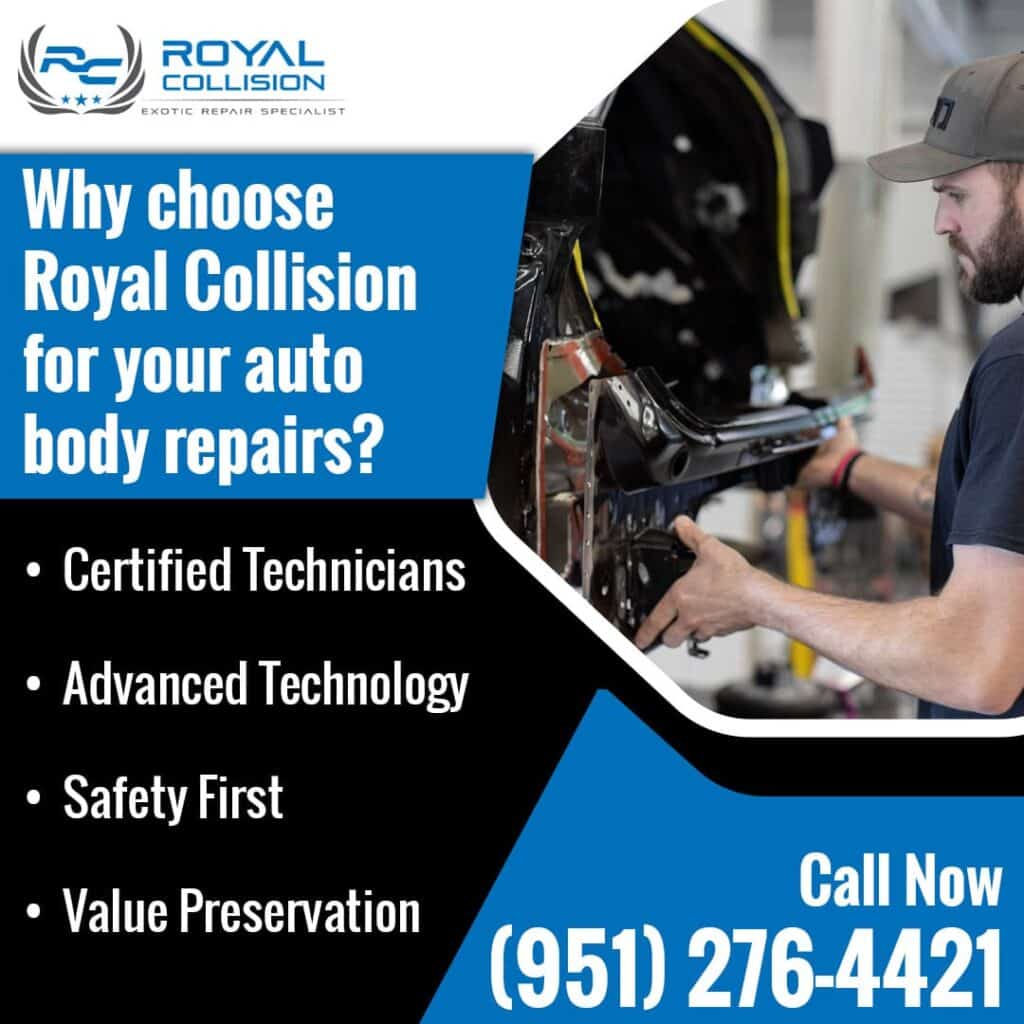
In the aftermath of a collision, vehicle integrity goes far beyond visible dents and scratches. Certified auto body shops provide professional auto body repair services that adhere to strict manufacturer standards for every structural, electronic, and cosmetic repair. By combining skilled craftsmanship, advanced technology, and thorough inspections, these experts restore vehicles to their original condition and performance.
Choosing a trusted repair facility protects passengers and preserves long-term reliability, giving drivers confidence every time they get back on the road. Royal Collision provides expert collision repair to Riverside, Highgrove, Grand Terrace, Colton, Loma Linda, Jurupa Valley, San Bernardino, Moreno Valley, and Redlands, delivering professional collision repair across the region. For expert collision repair in Riverside, contact Royal Collision at (951) 276-4421 or email ryan@royalcollisionriverside.com.