After an accident, many drivers focus on what they can see. A dented bumper, a scratched door, or a cracked headlight often feels like the full story. In reality, collision damage is rarely limited to the surface. Modern vehicles are engineered with complex structures, safety systems, and materials that can be affected even in low-speed impacts.
In Riverside, daily driving conditions increase collision risks. Congested commuter routes, frequent stop-and-go traffic, and tight parking areas contribute to a wide range of damage types. At Royal Collision, we have been providing auto body repair in Riverside, CA, since 2015. We explain the most common forms of auto body and collision damage, how they affect your vehicle, and why professional repairs matter.
We share information on visible and hidden damage, explain how different collisions impact vehicle safety, and outline what proper repairs involve. Our goal is to help you understand what your car may be dealing with after an accident so you can make informed decisions about repairs.
Why Auto Body Damage Is Often More Than Cosmetic
If your car still drives after an accident, you might assume the damage isn’t serious. This thinking creates real safety risks. Today’s vehicles rely on precisely engineered crush zones, reinforced framework, and multiple safety systems working together to protect you during collisions.
What you see on the outside rarely tells the complete story. That dented door might look cosmetic, but the impact could have bent the door’s internal reinforcement beam, shifted mounting hinges, or damaged the B-pillar that protects you during side impacts. These problems reduce protection in future accidents without obvious warning signs.
Even low-speed parking lot bumps can cause hidden damage. Modern bumper systems include reinforcement bars and energy absorbers behind the plastic cover. These components can bend or crush without creating visible external damage, compromising protection in your next accident.
Professional inspection using specialized equipment provides the only reliable way to identify all damage. We use frame measuring systems and computerized diagnostic scanners to find problems that won’t show up as dashboard warning lights until it’s too late.
Common Causes of Auto Body and Collision Damage in Riverside
Local driving conditions create specific accident patterns we see regularly at our Riverside auto body shop.
Heavy Freeway Commuter Traffic
The 91, I-215, and SR-60 carry heavy volume during morning and evening rush hours. Stop-and-go conditions, distracted driving, and sudden braking lead to rear-end collisions that often damage more than just the bumper cover. Even seemingly minor freeway impacts can bend frame rails and compromise crash protection.
Shopping Center Parking Lots
Parking lots at Canyon Crest Towne Centre, Tyler Mall, and shopping areas along Magnolia Avenue see frequent low-speed collisions. Backing vehicles, pedestrians, and limited visibility create perfect conditions for door dings, bumper scrapes, and side-swipes that damage sensors and misalign body panels.
Residential Neighborhood Streets
Many streets in Canyon Crest, La Sierra, and Orangecrest are narrow and often lined with on-street parking on both sides. Restricted sight lines at intersections, combined with driveways that back directly onto these streets, increase the risk of side-swipe and minor front-end collisions. Prompt, high-quality repairs are essential to preserve vehicle safety and long-term value.
Front-End Collision Damage and Required Repairs
When your vehicle’s front end takes a hit, damage extends far deeper than what you see on the surface. This area contains your engine, cooling system, safety sensors, and critical framework designed to absorb impact energy.
What Actually Gets Damaged
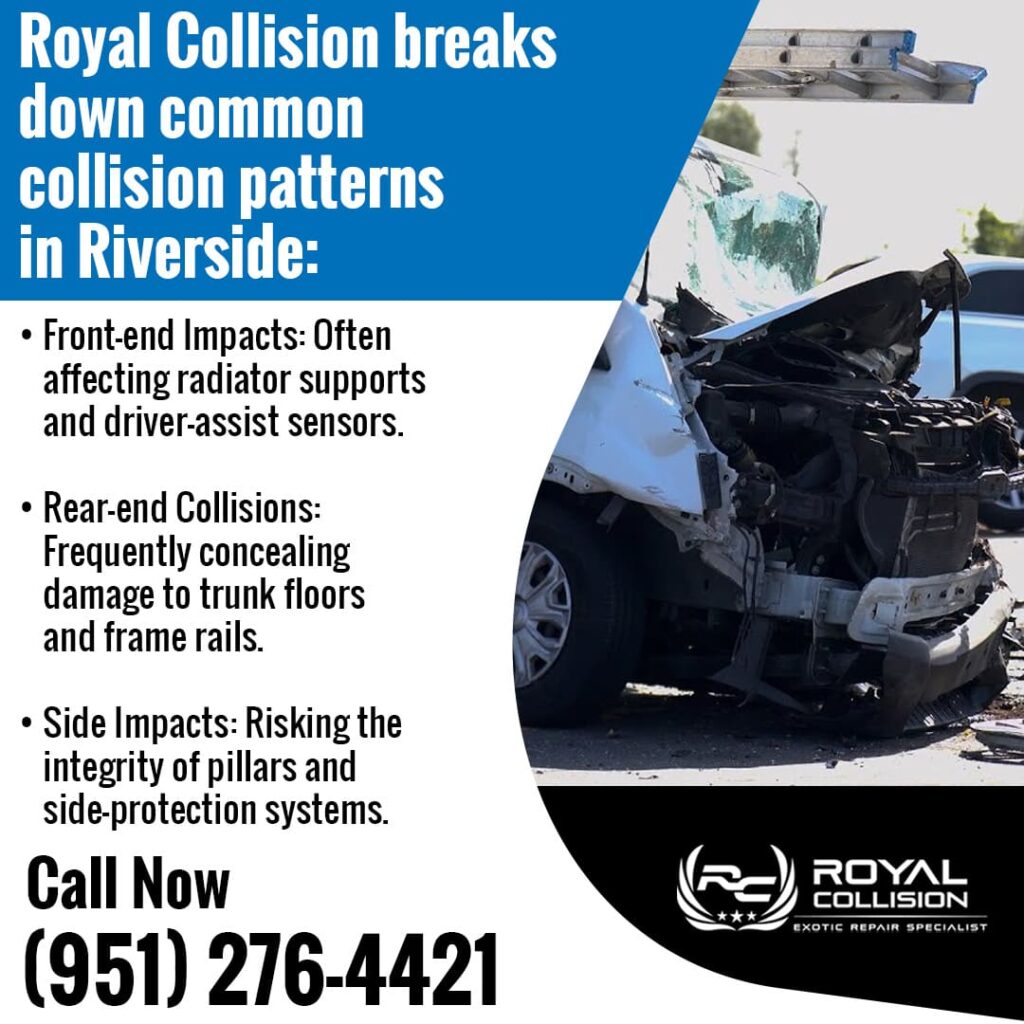
The plastic bumper cover gets attention first, but real concerns lie underneath. Impact force travels backward through the radiator support, into front frame rails, and potentially to the firewall separating your engine compartment from the passenger cabin. These components bend, crush, or shift position even in moderate collisions.
Your engine sits on mounting points that can crack during front-end impacts. Cooling system components, including the radiator, condenser, and intercooler, often sustain damage. The subframe holding your front suspension can twist or bend, affecting handling and causing premature tire wear.
Driver Assistance Systems at Risk
Most newer vehicles have multiple safety systems mounted in the front end. Adaptive cruise control uses radar sensors, forward collision warning relies on cameras, and automatic emergency braking combines both technologies. Front-end impacts knock these sensors out of alignment.
Even if they still work after the accident, they may not function correctly because they’re not aimed properly. After we complete repairs, these systems need recalibration by specialists. We coordinate this service through our partners to verify that your safety features work correctly.
How Frame Damage Affects Handling
Front frame rail damage changes your vehicle’s suspension geometry. When frame rails bend even slightly, this geometry shifts. You’ll notice effects through uneven tire wear, steering that pulls to one side, and handling that feels different. Our Car-o-liner measuring system verifies frame dimensions match manufacturer specifications within millimeters, restoring proper geometry.
Rear-End Collision Damage and Structural Concerns
Stop-and-go traffic makes rear-end collisions one of the most common accident types. These impacts create specific damage patterns extending beyond what you see in your trunk.
Hidden Damage Behind the Bumper
The trunk floor, rear body panel, and bumper reinforcement bar typically sustain damage in rear-end collisions. However, impact force travels forward through your vehicle’s framework, potentially affecting rear frame rails, floor pan sections, and suspension mounting points.
This framework damage often isn’t visible until we remove the bumper cover and trunk interior panels. Rear frame rails can buckle or develop kinks that weaken them. Floor pan sections can crease or tear. Suspension mounting points can crack or shift position.
Why Rear Crush Zones Matter
Your vehicle’s rear section is engineered to deform in specific ways during collisions. These crush zones absorb impact energy through controlled deformation, keeping energy from reaching you in the passenger cabin. When they work correctly, they can dramatically reduce injury severity.
After a rear-end collision, the metal in these zones has been work-hardened through initial impact. Its material properties have changed, affecting how it will behave in future accidents. Proper repair restores both the original shape and the crush zone’s ability to protect you again.
Long-Term Problems from Poor Repairs
Improperly repaired rear-end damage creates compounding problems. Misaligned rear suspension causes uneven tire wear and instability during emergency maneuvers. Poorly repaired trunk floors allow water leaks, creating rust that spreads and weakens the framework. Bent frame rails reduce protection in future collisions.
Royal Collision uses precision measurement throughout the repair process, checking dimensions against manufacturer specifications at multiple stages using our Car-o-liner system.
Side-Impact and Door Panel Damage
Side-impact collisions present particular safety challenges. Your vehicle has less framework between the impact point and the passenger cabin on the sides compared to the front or rear. These accidents often occur at intersections when one driver runs a red light or fails to yield.
Door Reinforcement and Protection
Your doors contain more than sheet metal and window mechanisms. Inside each door is a reinforcement beam designed specifically to protect you during side impacts. This beam, along with door latches and hinges, creates a protective barrier preventing intrusion into the passenger space.
When a door takes a hit, the reinforcement beam inside might bend, crack, or break loose from mounting points. The door might still open and close, but it’s lost some or all of its protective capability. Door hinges can bend, or mounting points can crack. This creates a risk that the door could open during a future collision.
Framework Pillars and Cabin Protection
The vertical pillars supporting your roof provide critical protection during side impacts. Your A-pillars run alongside the windshield, B-pillars separate the front and rear doors, and C-pillars support the rear roof. All three contribute to maintaining passenger cabin integrity.
Damage to any pillar requires careful evaluation and precision repair following the vehicle manufacturer’s exact procedures. These components must be restored to exact factory specifications using approved welding techniques to maintain their protective capability.
Airbag Systems Requiring Attention
Modern side-impact protection includes curtain airbags deploying from the roof rail and side airbags in seats or door panels. After any side collision triggers these systems, we inspect multiple components, including impact sensors, control modules, and wiring harnesses.
Common Auto Body Damage That Still Requires Professional Repair
Major collisions obviously need professional repair, but many drivers overlook damage that seems minor. Here’s what deserves attention even when it looks like a small problem.
Dents and Panel Deformation
Dents do more than harm your vehicle’s appearance. Body panels contribute to overall rigidity. When a panel dents, it loses some structural contribution, and mounting points where panels attach can shift position or develop cracks.
Water and road salt collect in dents, accelerating rust formation even when the paint looks intact. The deformed metal develops internal stress that can lead to cracking over time. For doors specifically, dents can prevent proper sealing, allowing water to enter the cabin and creating wind noise at highway speeds.
We can repair many dents through paintless dent removal, preserving your original factory finish. This works best when caught early, before rust starts or paint cracks.
Scratches and Paint Surface Damage
Your vehicle’s paint system includes multiple layers working together to protect the metal underneath from corrosion. When scratches cut through these protective layers to bare metal, corrosion begins immediately.
In humid conditions or when road salt is present, exposed steel can develop surface rust within 24-48 hours. This rust spreads underneath surrounding paint, eventually creating problems much larger than the original scratch. As experienced providers of local collision repair in Riverside, California, we perform repairs to protect from such damage.
Our refinishing process starts with proper surface preparation and rust treatment if corrosion has begun. We use Sherwin-Williams automotive paint systems, and our cross-down draft paint booth maintains controlled conditions, producing durable, factory-quality finishes.
Bumper Damage and Misalignment
Modern bumpers integrate multiple technologies. Parking sensors help you avoid obstacles when backing. Adaptive cruise control radar maintains safe following distances. Backup cameras show what’s behind you.
Behind the plastic bumper cover is a steel or aluminum reinforcement bar and energy-absorbing components. These hidden parts can bend, crush, or break without creating obvious external damage. When damaged, your bumper can’t protect you effectively in your next accident.
Misaligned bumpers also cause sensor malfunctions. Parking sensors give false warnings or fail to detect obstacles. Backup cameras show skewed images. We’ve traced many electronic problems back to bumper misalignment from minor collisions.
How Collision Repairs Differ From Standard Auto Body Repairs
People sometimes use “body work” and “collision repair” interchangeably, but they’re different services requiring different expertise and equipment.
Framework Repair Requires Specialized Equipment
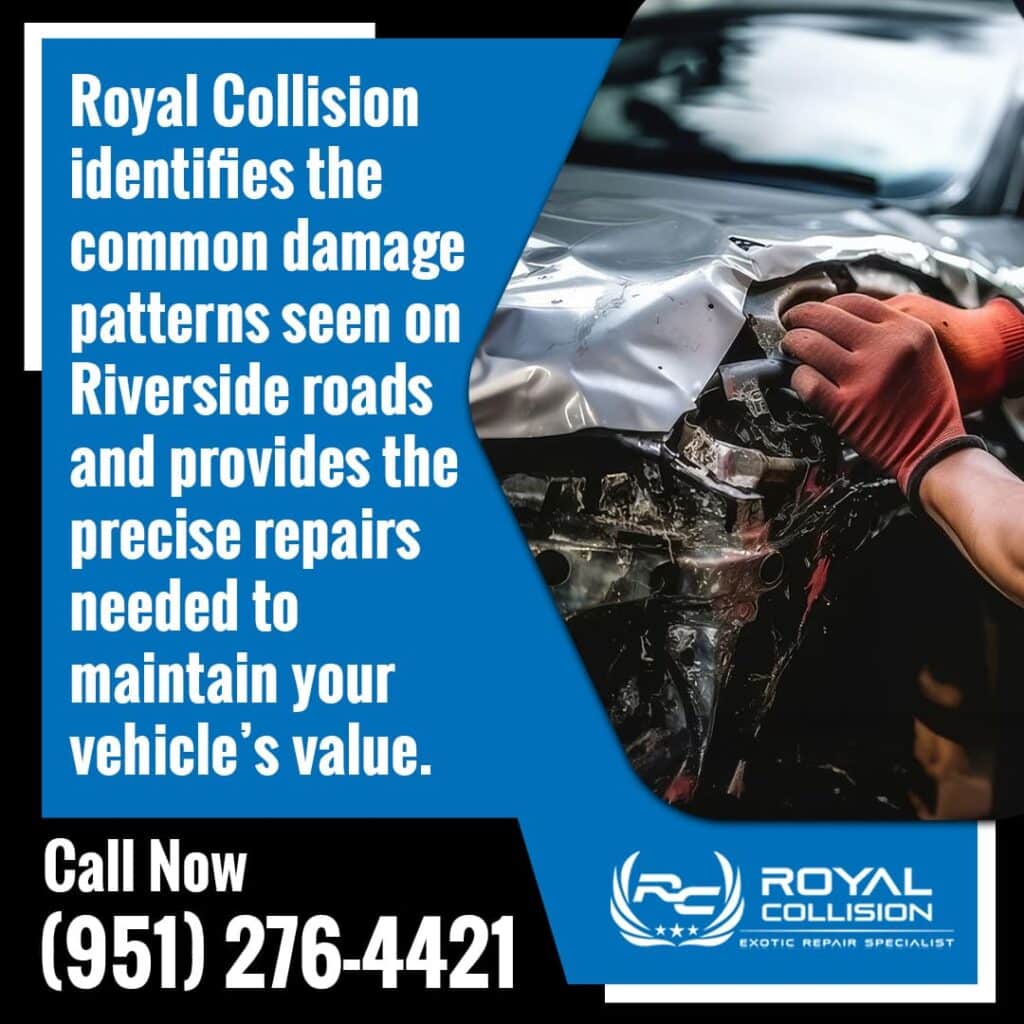
Our auto body repairs in Riverside, CA, focus on restoring your vehicle’s framework to exact factory specifications. When frame rails bend, unibody sections twist, or mounting points shift, we use our Cheetah frame rack to apply precisely controlled force that gradually returns metal to its original position.
This process requires computerized measuring systems to verify dimensions throughout the repair. Our measuring system uses multiple measurement points to create a three-dimensional model of your vehicle’s framework, comparing it against manufacturer specifications.
Body work focuses primarily on exterior appearance. Removing dents, refinishing paint, and replacing trim pieces all fall under bodywork. While these services require skill, they don’t involve the framework analysis and precision measurement that collision repair demands.
Inspection Goes Deeper
Collision repair requires comprehensive disassembly to examine hidden components. We remove bumper covers, fender liners, interior trim panels, and sometimes even the headliner to inspect areas you can’t see from outside. This reveals damage to the framework, floor pans, pillars, and mounting points that wouldn’t be discovered otherwise.
Why Proper Collision Repair Matters for Vehicle Safety
The quality of collision repairs directly affects how well your vehicle will protect you if you’re in another accident. Understanding this connection helps explain why we take such a meticulous approach to framework repair and measurement.
Engineered Crash Protection
Vehicle manufacturers spend millions engineering crash protection into every model. Computer modeling and crash testing determine exactly how each component should behave during different collision types. The framework, crush zones, and mounting points all work together as a system to manage collision forces.
When repairs don’t restore these components to exact factory specifications, the system can’t work as designed. Forces that should be directed away from the passenger cabin might not be. Crush zones that should deform in sequence might not collapse properly.
Safety Systems Depend on Proper Geometry
Modern safety systems, including airbags, depend on sensors measuring how quickly your vehicle decelerates during collisions. These sensors trigger airbags at the right moment with appropriate force based on collision severity. When framework repairs haven’t restored proper geometry, sensor positioning changes slightly, affecting when and how airbags deploy.
We follow OEM (Original Equipment Manufacturer) procedures precisely because vehicle manufacturers have tested these methods extensively. They know these procedures maintain the crash protection their vehicles were designed to provide.
Choosing a Local Auto Body & Collision Repair Shop in Riverside
The repair shop you choose affects more than just how quickly you get your vehicle back. It affects repair quality, how well your vehicle protects you in future accidents, and whether you’ll face problems months or years down the road.
Why Local Accountability Matters
Royal Collision has provided auto body and collision repair in Riverside neighborhoods for a decade. Our reputation depends on treating every customer fairly and completing every repair properly. When you choose a local, family-owned shop, you’re working with people who have a real stake in maintaining their community reputation.
Independence Allows Us to Advocate for You
Many shops participate in Direct Repair Programs with insurance companies. These arrangements often include agreements about repair times, parts usage, and procedures that can limit what the shop recommends.
We remain independent from these programs specifically and can advocate for your interests rather than insurance company cost-containment goals. When we find additional damage during disassembly, we recommend the repairs your vehicle needs, regardless of whether your insurance company wants to pay for them.
Our Commitment to Quality
We back every repair with our Limited Lifetime Warranty, covering all workmanship and paint for as long as you own your vehicle. Royal Collision uses OEM parts exclusively so that replaced components match your vehicle’s original specifications for fit, appearance, and crash protection. Here is what a customer said in a review about us, “Work was perfect, paint matched like it never happened ……was even able to get the insurance to use all OEM parts. I will be telling all my friends and family about this shop!
Questions to Ask Before Choosing a Shop
- Do you use OEM parts or aftermarket substitutes?
- Are you part of an insurance company’s direct repair programs?
- What equipment do you use to measure and straighten frames?
- How do you handle ADAS recalibration after repairs?
What to Expect During a Professional Collision Repair Process
Understanding our repair process helps you know what to expect and reduces stress during what’s often a challenging time.
Initial Evaluation and Documentation
When you bring your vehicle in, our technicians photograph all damage, document pre-existing conditions, and begin evaluating needed repairs. We use our Autel diagnostic scanning equipment to retrieve crash data and check for trouble codes indicating hidden damage to safety or mechanical systems.
Repair Planning and Insurance Coordination
Our auto body shop in Riverside, CA, handles communication with your insurance company, explaining necessary repairs and providing documentation supporting our recommendations. We document any additional damage found during repairs with photos and measurements, then advocate for authorization of additional work your vehicle needs.
The Repair Process
Once parts arrive and insurance authorization is confirmed, we begin repairs systematically. Frame straightening happens early because it provides a foundation for everything else. We use our Cheetah frame rack to apply controlled force while our Car-o-liner measuring system verifies we’re achieving exact factory specifications.
Final Verification
Before we contact you, we perform detailed quality checks on every repair aspect. For vehicles with Advanced Driver Assistance Systems, we coordinate recalibration through specialized partners. We complete a thorough detail, removing all protective coverings and cleaning every surface.
Protecting Your Vehicle After an Accident With Precise Auto Body Repair in Riverside
Understanding collision damage types and required repairs empowers you to make informed decisions about your vehicle’s care after accidents. Whether your collision occurred on busy freeways or in quiet parking lots, professional evaluation and proper repairs protect both safety and long-term value.
The difference between proper repairs and shortcuts might not be visible when you pick up your vehicle, but these differences matter tremendously for how well your vehicle will protect you in future accidents. From your initial phone call through final vehicle delivery, we keep you informed about what’s happening with your repair. We handle insurance communication so you don’t have to fight that battle yourself.
Are you looking for a Riverside, CA auto body shop that you can rely on? Contact Royal Collision at (951) 276-4421 or ryan@royalcollisionriverside.com to schedule a thorough inspection. We’ll evaluate all damage, explain needed repairs, and restore your vehicle to safe, reliable condition using proper procedures and quality materials.